office@lokmera.md
+373 22 28 88 22
Contact us
Româna
Русский
about us
Products
Analytical Instruments
Sisteme de dizolvare si dezintegrare
Sample preparation
Total Organic Carbon Analyzers (TOC)
General laboratory equipment
Incubators
Vortex mixers
Drying and heating ovens
Waterbath
Climate chamber
Capillary Electrophoresis
Automated Chemistry Analyzers
Microwave digestion
Nanotechnology
Atomic Absorption
Mass spectrometry
Liquid Chromatography/Mass Spectrometry (LC/MS)
Gas Chromatography/Mass Spectrometry (GC/MS)
Gas Chromatography
Liquid chromatography
Molecular spectroscopy
Test and measurement
Electricity
Calibration tools
Thermal vision
Echipament pentru expertize Criminalistice
Electronics
Ionizing radiation
Protection against ionizing radiation
Radiation protection
Dozimetria personala
Sisteme spectrometrice
Life Science
Medical incubators and ovens
Microarray solutions
Electron microscopy
Microscopy
Cell analysis (Seahorse)
Coagulometers
Microplate readers
Solutions
Telecommunication
Security and CBRN
Pharmaceuticals
Optics and photovoltaic
Material testing and research
Industrial testing
Energetic Industry Testing
Genomics
Cancer Genetics
Human & Reproductive Genetics
Life Sciences
Chromatography
Energy
Petrochemicals
Natural Gas
Biotechnology
Forensic
Forensic toxycology
Criminalistics
Food testing and agriculture
Veterinary Drugs Screening
Trace Metals
Organic Pollutants
Mediul ambiant
Soil and Sediments
Air Analysis
Soil Analysis
Water Analysis
Partners
Service and support
News
Careers
Industrial testing
Home
Solutions
Industrial testing
Industrial testing
Industrial testing
Search solutions
Mediul ambiant
Water Analysis
Soil Analysis
Air Analysis
Soil and Sediments
Food testing and agriculture
Organic Pollutants
Trace Metals
Veterinary Drugs Screening
Forensic
Criminalistics
Forensic toxycology
Energy
Petrochemicals
Natural Gas
Biotechnology
Genomics
Cancer Genetics
Human & Reproductive Genetics
Life Sciences
Industrial testing
Energetic Industry Testing
Material testing and research
Optics and photovoltaic
Pharmaceuticals
Security and CBRN
Telecommunication
Chromatography
Facebook
Lokmera SRL
Showing 1-8 from 8 results in category
Industrial testing
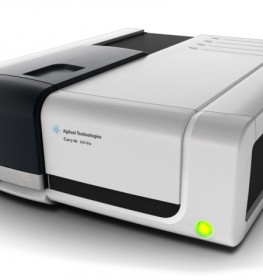
Cary 60 UV-Vis
Features Lowest cost of ownership – With an exceptionally long lifetime of three billion flashes, the lamp typically lasts for more than 10 years and so minimizes lamp replacement and instrument revalidation costs. Eliminate photobleaching – Safely measure life science samples and be sure that you get the correct answer every time. No need for cuvettes – Why use cuvettes when you can bring the instrument to the sample? A comprehensive range optional fiber optic measurement probes allow you to get accurate results in a fraction of the time. Measure precious samples with ease – The highly focused beam image is perfect for measuring small volumes accurately and reproducibly. Preserve your samples by getting accurate data from < 4 μL instead of using milliliters. Exceptionally fast data collection – With a scan rate of up to 24,000 nm/min, you can scan the entire wavelength range (190 to 1100 nm) in under three seconds and collect data from single or multiple wavelengths at 80 data points per second. Performance enhancing accessories – With a comprehensive range of accessories, including fiber optic probes and couplers, Peltier and water-thermostatted single and multicell holders, temperature probes and microvolume sampling cells right through to solid sample holders, fiber optic reflectance probes, remote DRA accessory and fixed angle specular reflectance accessories (SRA), you can characterize the widest variety of sample sizes and types without compromise. Software designed for real samples – Win10-compatible Cary WinUV software can be tailored to suit your analytical requirements. From classroom teaching and research laboratories in academia through R&D and regulated QA/QC environments in the pharmaceutical industry, the comprehensive WinUV software simplifies your measurements and ensures that you get more done in less time.
Details
Criminalistics
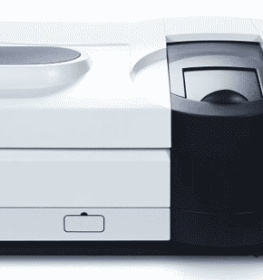
Cary 4000 UV-Vis
Features Measure beyond 8.0 absorbance units with reference beam attenuation WinUV software– optional modules for bio and pharma Versatile set of accessories including temperature control, liquid and solid sample holders, autosamplers, multicell holders, sippers, and fluorescence Variable slit widths (down to 0.01 nm) for optimum control over data resolution Large sample compartment with precision LockDown mechanism for quick changes of accessories Maximum light throughput using Schwarzchild coupling optics Minimal noise and stray light using a floating aluminum casting and double Littrow monochromator Extended dynamic range by attenuating the reference beam more in line with the sample absorbance Nitrogen pumping – separate purging in the sample and monochromator compartments
Details
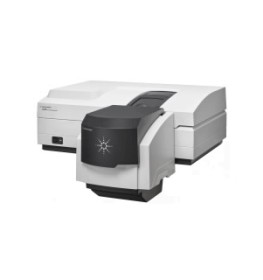
Cary 7000 UMS
Features Achieve complete sample characterization Measure absolute reflection and transmission in a single sequence – at variable angle and s or p polarization – without moving or disturbing the sample. Measure diffusely scattered transmission and reflection with the freedom to control detector and sample position independently. Utilize the huge sample chamber to accommodate all sample types – from small to large – delivering 360 degrees of rotational flexibility Obtain complete control of beam collimation and patch size to best suit your sample and measurement needs Lower your cost-per-analysis, saving you time and money Measure in minutes what other systems take hours to days to complete – with unattended automation Simply set up your method, collect a single baseline, insert one or more samples, and walk away. New insights into advanced materials with an unprecedented 10 Abs range With 10 Abs range on the Cary 7000 spectrophotometer, the Cary 7000 UMS ensures you obtain high quality results even with challenging sample measurements (high OD) or under difficult measurement conditions. Obtain the highest quality results fast with the next generation Cary WinUV software The Cary WinUV software features a new method editor for simple method setup, advanced data processing, and 3D graphics, ensuring fast and accurate data analysis.
Details
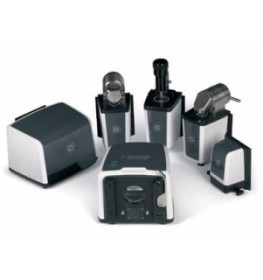
Cary 630 FTIR
Features: Innovative — unique sampling accessories snap in and out in seconds, with no alignment required, making transmission as easy to use as ATR Intuitive — method driven, multi-language software guides users through every step of operation, while color coding alerts make it easy to see whether samples meet specifications. MicroLab Quant provides a simple, guided quantitative methods development package. Reliable — field proven, rugged optomechanical system offers outstanding performance and reproducibility, even in humid and tropical environments, providing answers you can trust … day-in/day-out Versatile — interchangeable sampling accessories for all your analysis needs, including standard transmission, DialPath, TumblIR, Diamond ATR, Germanium ATR, ZnSe ATR, 10 or 45 degree specular reflectance and diffuse reflectance. Compliant – GLP/GMP software can be upgraded to be compliant with 21 CFR 11 regulatory requirements through the addition of the Pharmaceutical Software Package Compact — taking up only 20 x 20 cm of bench space, and weighing just 3.6 kg (8 lb), the Agilent Cary 630 FTIR is the world’s smallest and lightest FTIR benchtop packing the biggest punch Affordable — the Agilent Cary 630 FTIR offers leading-class performance at an attractive price
Details
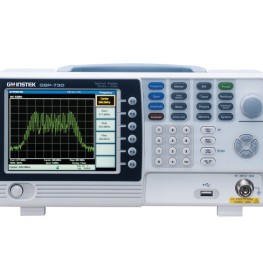
GW Instek GSP-730 Spectrum Analyzer
Features: Frequency Range : 150kHz ~ 3GHz Autoset Function Noise Floor: ≦-100dBm RBW Range : 30kHz, 100kHz, 300kHz, 1MHz ACPR/CHPW/OCBW Measurement 3 Traces in Different Colors Split Window Function Limit Line Function Remote Control Software Presentation Material for Training Courses Support Interface : USB Device/Host, RS-232C 5.6” TFT LCD with VGA Output
Details
Energetic Industry Testing
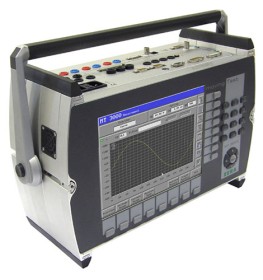
Reference Meters MT3000
Features: Accuracy class 0.02 and 0.05 Colour display Modular design System upgrade at any time Unique long-term and temperature stability of the measuring modules No additional error for reactive power measurement Current measurement up to 300 A using error-compensated AC-current clamp Ratio test by simultaneous measurement of both primary and secondary currents in instrument transformer meter systems using six measuring channels Testing of voltage, current and power transducers
Details
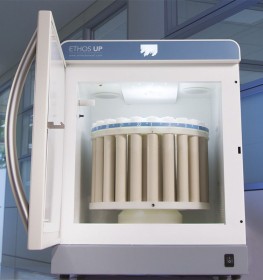
ETHOS UP
High Performance Microwave Digestion System The new ETHOS UP is simply the most advanced yet easy to use system for microwave sample preparation we have ever manufactured. It offers a perfect integration between microwave hardware, user interface, digestion sensors and pressure vessels. The ETHOS UP fully embodies Milestone’s philosophy in microwave sample preparation. Specifically designed for closed vessel microwave acid digestion, it offers productivity, safety, ease of use, connectivity, expertise and application flexibility. Featuring a comprehensive choice of accessories, ETHOS UP microwave digestion system encompasses Milestone’s visionary concept of “Total Microwave Sample Preparation” offering a complete first-class solution for microwave solvent extraction, high-temperature fusion, vacuum evaporation and even organic and inorganic synthesis or protein hydrolysis. Safety and reliability. Best microwave hardware, temperature and pressure sensors Performance and throughput. easyTEMP temperature control and advanced rotor technology Ease of use and control. EasyCONTROL operating software Expertise and know-how. 30-years experience at your lab with the Milestone Connect Flexibility. Rotor-based digestion system for hundreds of applications.
Details
Forensic toxycology
Soil and Sediments
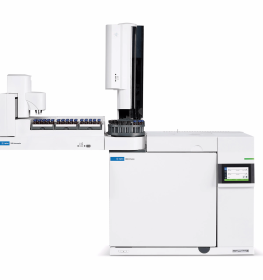
8860 GC
Features: Advanced instrument intelligence functionality for GC diagnostics and maintenance helps lab managers better avoid unplanned downtime, minimizing costly operational surprises Color touch screen display provides access to GC setpoint and status information, configuration, and signal plot to confirm that analyses are progressing as intended Browser user interface provides convenient access from a PC or tablet to edit methods and sequences, access advanced intelligence functions, see instrument status, and run diagnostics from any place within reach of your lab network—even from home Unique 6th-generation microchannel-based EPC architecture provides a significant improvement in reliability and longevity against gas contaminants such as particulates, water, and oils over previous generation Agilent GC designs, as well as other GC vendors’ designs Full 8860 electronic pneumatics control (EPC)—available on all inlets and detectors—ensures better repeatability of retention times and peak areas, more consistent results, and less rework Optional helium conservation module reduces the amount of helium used and the associated costs Optional Hydrogen Sensor Module Series 2 detects hydrogen leaks early and shuts off gas flows, continuously monitors status using built-in intelligent diagnostics, and requires calibration only every six months Retention time locking (RTL), available with most Agilent OpenLab CDS software, provides the ability to precisely match chromatographic retention times in any GC system to those in another Agilent GC system with the same method and column Autoranging flame ionization detector (FID) provides a wide dynamic response range, enhances accuracy, and minimizes preparation requirements for samples that contain very high or very low compound concentrations Single-filament thermal conductivity detector (TCD) provides a stable baseline without drift and does not require a separate reference gas or manual potentiometer adjustment
Details
Request Quote
Please complete form below to request quote.



 Româna
 Русский